







Cryptocurrency gives people full control over their money. That freedom comes with a responsibility. When you hold crypto, you are also responsible for protecting it. Unlike traditional banks, no customer support line can recover funds if private keys are lost or stolen. This is why security is one of the most important aspects of crypto ownership.
- What is Cold Storage in Cryptocurrency
- Comparing Cold Storage Methods
- Why Cold Storage is Important for Crypto Security
- Hardware Wallets: The Most Popular Cold Storage Method
- Top Recommended Hardware Wallets for Cold Storage in 2026
- Paper Wallets: A Simple Offline Storage Method
- Seed Phrases and Backup Security
- Air Gapped Storage for Advanced Security
- Storage Tips for Keeping Cold Wallets Safe
- Multi-Location Backups Reduce Risk
- Cold Storage and Long-Term Investment Strategy
- Inheritance Planning for Cold-Stored Crypto
- Common Cold Storage Mistakes to Avoid
- The Balance Between Security and Accessibility
- Conclusion
One of the safest ways to protect digital assets is through cold storage. Cold storage refers to storing cryptocurrency private keys completely offline so they are not exposed to internet threats. Hacks, phishing attacks, malware, and exchange failures are common risks in the crypto space. Keeping private keys offline significantly reduces the chance that attackers can access them.
Cold storage has become a standard practice for long-term holders, institutions, and anyone managing significant crypto funds. While the concept is simple, doing it properly requires understanding different storage methods and following strong security habits.
This guide explains how cold storage works, the most reliable cold storage methods, and the best practices for storing cryptocurrency offline securely.
What is Cold Storage in Cryptocurrency
Cold storage refers to any method of storing cryptocurrency private keys in an environment that is not connected to the internet. Because the keys are offline, remote attackers cannot reach them through online attacks.
To understand why cold storage matters, it helps to remember how crypto ownership works. When someone owns Bitcoin, Ethereum, or another cryptocurrency, they do not technically hold coins in a wallet. Instead, they hold private keys that prove ownership of funds on the blockchain.
If someone gains access to those private keys, they can transfer the funds. Once a transaction is confirmed on the blockchain, it cannot be reversed. This is why protecting private keys is essential.
Hot wallets, such as mobile apps, browser wallets, or exchange accounts, remain connected to the internet. They are convenient for daily transactions but are more vulnerable to hacking.
Cold wallets, on the other hand, keep private keys offline. This dramatically reduces the attack surface.
Common cold storage methods include:
- Hardware wallets
- Paper wallets
- Air gapped devices
- Offline computers are used only for signing transactions.
Each method offers different levels of security and convenience.
Comparing Cold Storage Methods
| Method | Security Level | Ease of Use | Approximate Cost | Pros | Cons | Best For | Supported Assets |
|---|---|---|---|---|---|---|---|
| Hardware Wallets | Very High | Moderate | $50–$200 | Offline signing, malware-resistant, user-friendly apps | Supply chain risk, potential firmware vulnerabilities | Most users (daily/medium holdings) | Thousands (multi-coin) |
| Paper Wallets | High | Low | Free–$10 | Completely offline, no electronics | Easily damaged/lost, hard to use securely | Long-term “set and forget” | Any (generate offline) |
| Air-Gapped Devices | Extremely High | Low | $100–$500+ | No connectivity ever, QR/NFC signing | Complex setup, less convenient | High-value holdings, privacy pros | Varies (often Bitcoin/multi) |
Why Cold Storage is Important for Crypto Security
The cryptocurrency industry has experienced numerous security breaches over the years. Exchanges, wallets, and platforms have been targeted by attackers seeking access to user funds.
Several risks make cold storage important.
Exchange hacks are one of the biggest threats. When users keep funds on centralized exchanges, they do not control their private keys. If the exchange is hacked or becomes insolvent, funds may be lost.
Malware and phishing attacks can also compromise hot wallets. Malicious software can steal private keys or trick users into revealing recovery phrases.
SIM swapping attacks have been used to gain access to accounts protected only by SMS authentication.
Cold storage helps protect against these threats because private keys remain offline. Even if a computer is compromised, attackers cannot access keys that are stored on a disconnected device.
For long-term investors, cold storage is widely considered one of the safest ways to protect digital assets.
Hardware Wallets: The Most Popular Cold Storage Method
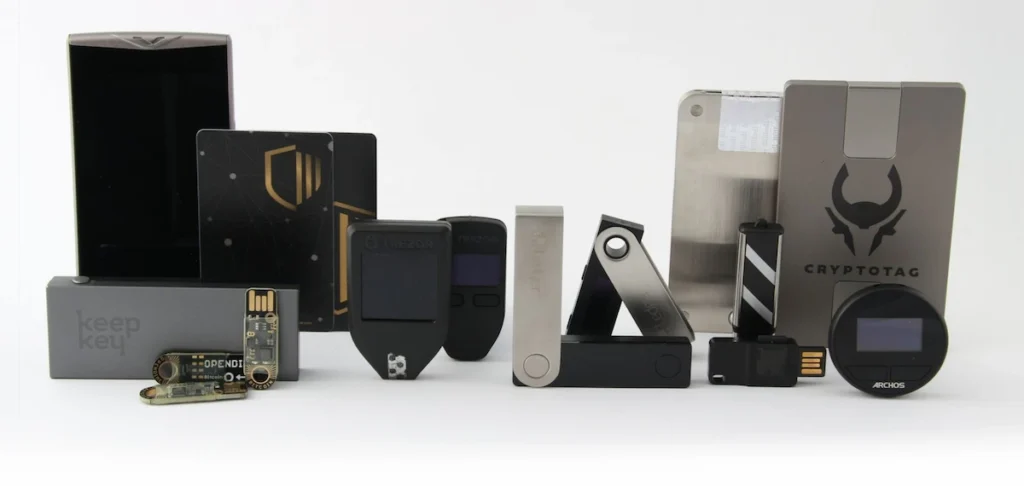
Hardware wallets are physical devices designed specifically to store cryptocurrency private keys offline. They are widely considered one of the most secure and user-friendly cold storage solutions.
These devices generate and store private keys inside secure hardware components. When users want to send crypto, the transaction is signed inside the device. The private key never leaves the hardware wallet.
Even if the connected computer is infected with malware, the private key remains protected inside the device.
Hardware wallets typically support many cryptocurrencies and include features such as PIN protection, encrypted storage, and recovery seed phrases.
Some key advantages of hardware wallets include:
| Benefit | Description | Why It Matters / Key Benefit |
|---|---|---|
| Strong Security Architecture | Hardware wallets are designed with secure elements (e.g., CC EAL5+/EAL6+ certified chips) that isolate and protect private keys from any external access. | Private keys never leave the device → significantly reduces risk of remote hacks and key theft. |
| Protection Against Malware | Transactions are displayed and must be physically confirmed on the device screen before signing/approval. | Prevents man-in-the-middle attacks, clipboard hijacking, or malware from altering recipient addresses or amounts. |
| Ease of Use | Most hardware wallets include user-friendly companion apps (desktop/mobile) for managing addresses, viewing balances, and initiating transactions. | Combines high security with convenience — suitable for beginners and frequent users alike. |
| Recovery Options | During initial setup, users are given a 12/24-word recovery seed phrase (BIP-39 standard) that can restore the wallet on a new compatible device. | Funds remain accessible even if the hardware device is lost, stolen, broken, or destroyed — as long as the seed phrase is safely backed up. |
Despite these advantages, hardware wallets must still be used carefully. Buying devices only from official manufacturers is important. Tampered devices could compromise security.
Users should also verify device authenticity and update firmware when necessary.
Top Recommended Hardware Wallets for Cold Storage in 2026
| Rank | Wallet Model | Approx. Price | Key Security Features | Supported Assets | Connectivity | Best For | Official Site/Link |
|---|---|---|---|---|---|---|---|
| 1 | Tangem Wallet | $55–$90 | NFC card-based, EAL6+ chip, no battery/seed optional | 6,000+ | NFC (phone tap) | Beginners, portability | tangem.com |
| 2 | Ledger Nano X | $149 | CC EAL5+ Secure Element, Bluetooth | 5,500+ | Bluetooth + USB | Beginners & multi-coin users | ledger.com |
| 3 | Trezor Safe 5 / Model T | $169–$219 | Open-source, touchscreen, dual secure elements | Thousands | USB-C | Privacy-focused, long-term holders | trezor.io |
| 4 | Ledger Flex | $249 | Touchscreen, secure chip, premium build | 5,500+ | Bluetooth + USB | Users wanting better UX | ledger.com |
| 5 | SafePal S1 / X1 | $50–$80 | Air-gapped QR, mobile app integration | Multi-chain | QR codes | DeFi access on budget | safepal.com |
| 6 | Keystone 3 Pro | $129 | Open-source, large screen, air-gapped | Multi-chain | QR codes | Advanced users, Bitcoin/DeFi | keystonewallet.com |
| 7 | Coldcard Q | $200+ | Bitcoin-only, QR/NFC, ultra-secure | Bitcoin only | QR/NFC/USB | Bitcoin maximalists | coinkite.com |
| 8 | NGRAVE Zero | $400+ | Fully air-gapped, EAL7 chip | Multi-chain | QR codes | Maximum security (high-value) | ngrave.io |
Paper Wallets: A Simple Offline Storage Method
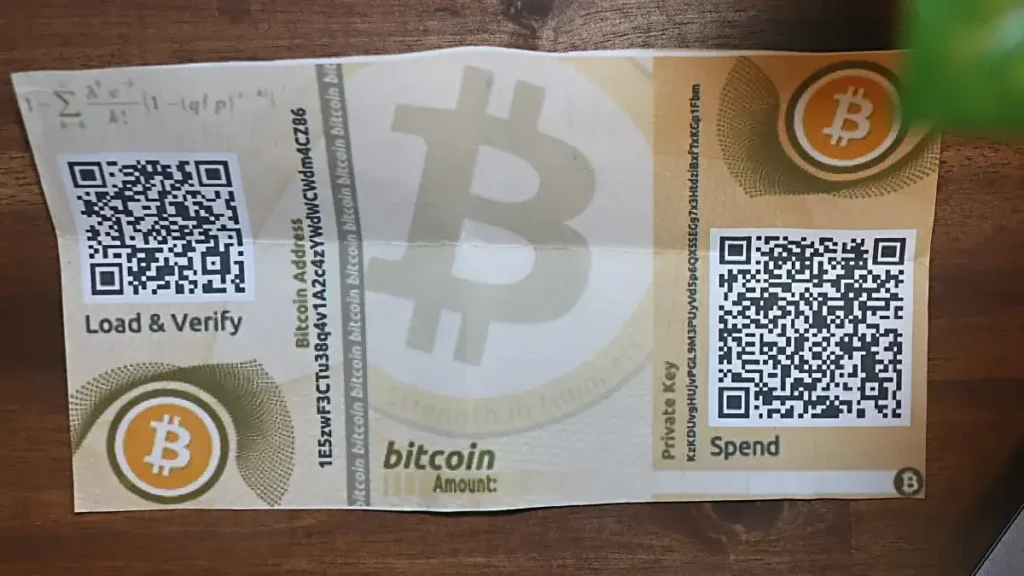
Paper wallets were once a popular cold storage solution because they require no electronic device. A paper wallet is simply a physical document that contains a cryptocurrency private key and its corresponding public address.
Typically, the key information is printed as both text and QR codes. Users can send funds to the public address while keeping the private key hidden until they need to access the funds.
The main advantage of paper wallets is that they are completely offline. Since the private key exists only on paper, it cannot be hacked remotely.
However, paper wallets come with several challenges.
| Risk Category | Description | Why It’s a Problem | Mitigation Tips (if applicable) |
|---|---|---|---|
| Physical Damage Risk | Paper can be damaged by water, fire, fading ink, tearing, sunlight exposure, or general wear and tear. | Irreversible loss of access to funds if the wallet becomes unreadable or destroyed. | Laminate the paper, store in a fireproof/waterproof safe, or upgrade to metal seed backups (e.g., Billfodl or CryptoSteel). |
| Loss Risk | If the paper wallet is lost, stolen, misplaced, or accidentally discarded. | Permanent and unrecoverable loss of cryptocurrency—no way to regain access without the private key/seed. | Use multiple secure backups in different locations; never rely on a single copy. Consider inheritance planning. |
| Generation Security Risk | If generated using an online tool, compromised computer, malware-infected device, or public printer. | Private key may already be exposed or stolen before printing—attacker can sweep funds immediately. | Always generate offline on an air-gapped computer; verify the tool/source; avoid any internet-connected device during creation. |
For this reason, paper wallets should only be generated using trusted offline tools on a secure device.
Many experts today prefer hardware wallets because they are easier to manage and provide additional safety features.
Seed Phrases and Backup Security
One of the most critical parts of cold storage is protecting the seed phrase, also called a recovery phrase.
A seed phrase is a list of words generated during wallet setup. These words act as a master key that can restore the wallet and all associated private keys.
If someone gains access to the seed phrase, they can recover the wallet and transfer all funds. Because of this, seed phrase security is just as important as private key security.
| Backup Type | Durability | Approx. Cost | Ease of Setup | Fire/Water Resistance | Recommended Brands/Examples | Best For |
|---|---|---|---|---|---|---|
| Laminated Paper | Low | Free–$5 | Very Easy | Low | Standard paper + lamination | Temporary/low-value |
| Metal Plates/Engraved | Very High | $50–$150 | Moderate | Excellent (fireproof up to 2500°F+) | Billfodl, CryptoSteel, Stamp Seed, Cryptosteel | Long-term, high-security |
| Encrypted Offline USB | Moderate | $20–$80 | Moderate | Moderate | IronKey or offline-verified drives | Tech-savvy users |
| Titanium Stamping Kits | Extremely High | $80–$200 | Moderate | Superior | Stamp Seed, Syfra | Ultimate durability |
There are several best practices for protecting recovery phrases.
First, the seed phrase should always be written down and stored offline. Saving it in cloud storage, email, or digital notes increases the risk of exposure.
Second, many users store seed phrases in multiple secure locations. This protects against loss due to disasters such as fires or floods.
Third, specialized metal backup plates are often used instead of paper. These plates can withstand extreme heat and physical damage.
Finally, seed phrases should never be shared with anyone. Legitimate wallet providers will never ask for a recovery phrase.
Protecting the seed phrase properly ensures that funds remain recoverable even if the original wallet device is lost.
Air Gapped Storage for Advanced Security
Air gapped storage refers to keeping cryptocurrency private keys on a device that has never been connected to the internet. This approach is often used by security professionals and institutional investors managing large amounts of cryptocurrency.
An air-gapped wallet usually involves a dedicated offline computer or device that is used only for signing transactions.
The process generally works like this:
- A transaction is created on an online computer.
- The offline device signs the transaction using the private key.
- The unsigned transaction is transferred to the offline device using a USB drive or QR code.
- The signed transaction is moved back to the online device and broadcast to the network.
Because the private keys never touch an internet-connected system, remote attacks become extremely difficult.
Air gapped setups can be very secure, but they require technical knowledge and careful procedures. For most individual users, hardware wallets provide a simpler solution with strong protection.
Storage Tips for Keeping Cold Wallets Safe
Cold storage protects crypto from online threats, but proper storage practices are still essential. Even the most secure wallet can become vulnerable if it is stored poorly or handled carelessly. Physical security, backups, and access control all play a role in protecting cryptocurrency.
One of the most important rules is to store wallets in secure locations. Hardware wallets and paper wallets should never be left in easily accessible places. Many users store them in home safes, bank deposit boxes, or other locked storage solutions.
Another important practice is separating wallet devices and backup phrases. If both are stored together, anyone who gains access to the storage location could recover the funds. Keeping them in different secure locations reduces this risk.
Environmental protection is also important. Paper wallets and recovery phrases should be protected from moisture, heat, and sunlight. Even hardware wallets should be stored carefully to avoid physical damage.
For long term storage, some users also use tamper-evident bags or sealed containers. These allow owners to detect whether someone has attempted to access the wallet.
Finally, users should periodically verify that their backups are still readable and accessible. A damaged or illegible recovery phrase can make funds impossible to recover.
Multi-Location Backups Reduce Risk
Cold storage improves security, but relying on a single backup location introduces another type of risk. Physical disasters such as fires, floods, or theft could destroy a wallet and its backup at the same time.
To reduce this risk, many crypto holders use multi-location backups.
This means storing copies of recovery phrases or wallet backups in different secure places. For example, one copy may be stored at home while another is stored in a bank safe deposit box.
Some people also split backups across multiple locations. This approach ensures that a single compromised location cannot expose the full recovery phrase.
However, backups must remain accessible to the owner. Overcomplicated backup systems can make recovery difficult when it is actually needed.
A balanced approach usually works best. The goal is to protect against both theft and accidental loss.
Cold Storage and Long-Term Investment Strategy
Cold storage is often associated with long-term crypto investing. Investors who plan to hold assets for years typically prioritize security over convenience. When assets are stored in cold wallets, they are less likely to be exposed to trading platform failures or online attacks. This strategy is commonly used by people who follow a long-term holding approach.
Cold storage also encourages disciplined investing. Since accessing funds requires more effort than using a hot wallet, it reduces the temptation to make impulsive trades during market volatility.
Large investors and institutions also rely heavily on cold storage systems. Many crypto custody providers store the majority of their holdings offline while keeping only small operational balances online.
For individuals, the same principle applies. Daily spending funds may remain in hot wallets while long-term holdings stay in cold storage.
This separation between active funds and stored funds helps maintain both usability and security.
Inheritance Planning for Cold-Stored Crypto

One challenge with cold storage is ensuring that funds can be recovered if the owner becomes unable to access them. Without proper planning, cryptocurrency may become permanently inaccessible.
Inheritance planning is, therefore, an important part of secure crypto storage.
One basic step is documenting where wallets and recovery phrases are stored. This information should be kept in a secure but accessible location.
Some users include crypto access instructions in estate planning documents. Trusted family members or legal representatives may also be informed about the existence of the assets without revealing the full recovery phrase.
Another approach is dividing recovery information across multiple trusted individuals. This ensures that no single person has full access while still allowing recovery if needed.
The goal is to create a plan that protects funds during the owner’s lifetime while still allowing recovery under specific circumstances.
Common Cold Storage Mistakes to Avoid
Even though cold storage improves security, mistakes during setup or storage can still lead to losses. Understanding common mistakes can help users avoid preventable risks.
| Common Mistake | Why It’s Risky | Best Practice Alternative |
|---|---|---|
| Storing seed phrase digitally/online | Hackers/phishing can steal it | Keep offline only; use metal/paper backups |
| Buying hardware from third-party sellers | Tampered/fake devices with backdoors | Purchase directly from official website |
| Not testing recovery phrase | You may discover issues too late | Practice restoring wallet with small test amount |
| Single backup location | Fire/theft/loss destroys everything | Use multiple secure locations (e.g., safe + trusted family) |
| Ignoring inheritance planning | Family can’t access funds after you | Use multi-sig or dead man’s switch services |
One common mistake is storing recovery phrases digitally. Saving seed phrases in screenshots, cloud storage, or email exposes them to hackers.
Another mistake is buying hardware wallets from untrusted sellers. Devices purchased from unofficial marketplaces may be tampered with before delivery.
Users also sometimes fail to verify wallet addresses during transactions. Malware can replace copied wallet addresses with attacker-controlled ones. Always verifying the address on the hardware wallet screen helps prevent this.
A different risk involves not testing recovery procedures. Users should confirm that their recovery phrase works by restoring the wallet on another device. This ensures that backups are correct before large funds are stored.
Some people also forget to update the wallet firmware. Firmware updates often include security improvements that protect against newly discovered vulnerabilities.
Finally, overcomplicating storage systems can create problems. Security measures should be strong but also manageable. If a setup is too complex, the risk of user error increases.
The Balance Between Security and Accessibility
Cold storage offers strong protection, but users must balance security with practical access. Completely locking away funds without any recovery plan can be just as risky as poor security. The goal is to protect assets while still ensuring they remain accessible to the rightful owner.
Many experienced crypto holders follow a layered approach. Small amounts remain in hot wallets for everyday use, while the majority of funds stay in cold storage. Backups are stored securely in multiple locations, and recovery procedures are documented carefully.
This layered approach reduces the likelihood of both hacking and accidental loss.
Conclusion
Cold storage remains one of the most effective ways to protect cryptocurrency holdings. By keeping private keys offline, users significantly reduce exposure to hacking, phishing, and malware attacks.
Several cold storage methods are available, including hardware wallets, paper wallets, and air gapped devices. Among these, hardware wallets have become the most widely used option because they combine strong security with ease of use.
However, secure cold storage requires more than simply choosing the right wallet. Protecting seed phrases, maintaining backups, storing devices safely, and planning for recovery are all essential parts of the process.
As the cryptocurrency ecosystem continues to grow, security practices will remain a critical responsibility for investors. Those who take the time to implement proper cold storage strategies can protect their assets from many of the most common risks in the digital asset space.
With the right approach, storing crypto offline can provide both long-term security and peace of mind.
Must read: Should I Use MetaMask or A Hardware Wallet?