




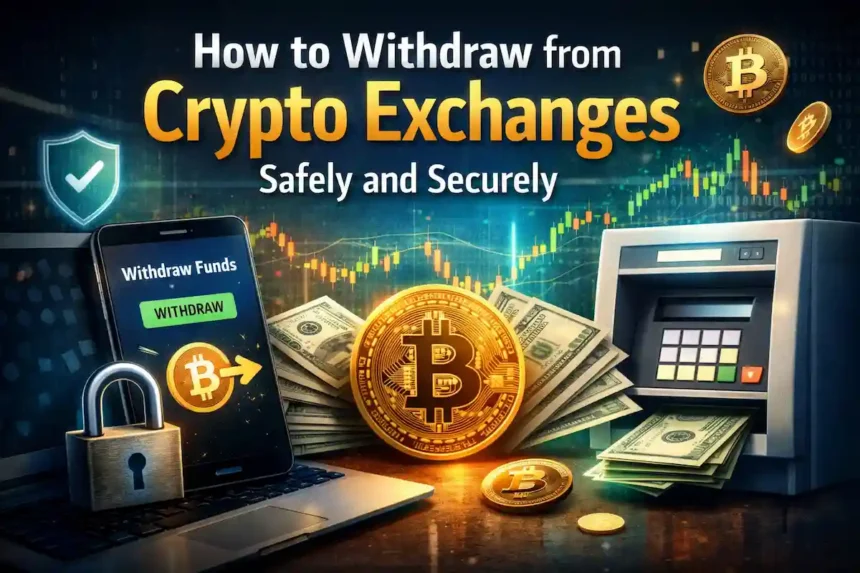
Withdrawing cryptocurrency from an exchange is one of the most important steps in managing your digital assets. Whether you want to move crypto to a personal wallet for long-term storage or convert it into cash and transfer it to your bank account, the withdrawal process must be done carefully. A small mistake, such as choosing the wrong network or entering an incorrect wallet address, can lead to permanent loss of funds.
- Understanding the Basics of Crypto Withdrawals
- How to Withdraw Crypto to a Personal Wallet
- Choosing the Right Network for Withdrawal
- Understanding Withdrawal Fees
- How Long Do Crypto Withdrawals Take
- Security Best Practices Before Withdrawing
- How to Withdraw Crypto to a Bank Account
- KYC and Compliance Requirements
- Common Withdrawal Mistakes and How to Avoid Them
- Withdrawal Fees and How to Reduce Them
- What to Do If a Withdrawal Is Stuck or Delayed
- Tax Considerations When Withdrawing Crypto
- Final Safety Checklist Before Withdrawing
- Final Thoughts
Many users focus heavily on buying crypto but give less attention to withdrawals until the moment they need them. This is where confusion often begins. Questions like which network to choose, how much fees will be charged, or how long the withdrawal will take are common. Security is another major concern, especially with increasing cases of phishing attacks and compromised exchange accounts.
This guide explains how to withdraw from crypto exchanges (like Binance, Coinbase, Kraken, OKX) in a safe and structured way. It covers the complete withdrawal process, common fees, supported networks, and best security practices. Whether you are a beginner or an experienced trader, understanding these basics will help you move your crypto confidently and avoid costly errors.
Understanding the Basics of Crypto Withdrawals
A crypto withdrawal simply means transferring cryptocurrency from one exchange to another destination. This destination can be a personal wallet, another exchange, or a bank account if you are converting crypto to fiat currency.
There are two main types of withdrawals:
1. Crypto withdrawal
Crypto withdrawal involve sending digital assets like Bitcoin or Ethereum to a blockchain wallet address. These transactions are recorded on the blockchain and cannot be reversed once confirmed.
2. Fiat withdrawal
Fiat withdrawal involve selling crypto on the exchange and transferring the resulting money to your linked bank account using methods like bank transfer or payment gateways.
Crypto vs. Fiat Withdrawal Steps Comparison
Each type follows a different process, has different fees, and requires different security checks. Knowing which one you need helps you plan your withdrawal correctly.
| Step | Crypto to Wallet | Fiat to Bank |
|---|---|---|
| 1 | Log in & select asset | Sell crypto to fiat first |
| 2 | Enter wallet address | Select bank transfer method |
| 3 | Choose network | Verify/add bank details |
| 4 | Enter amount & review fees | Enter amount & review fees |
| 5 | Verify with 2FA | Confirm KYC & security |
| 6 | Broadcast transaction | Process (1-5 days) |
| Risks | Wrong network/address | Bank delays/holidays |
How to Withdraw Crypto to a Personal Wallet
Withdrawing crypto to a personal wallet is often recommended for users who want full control over their funds. Exchanges hold private keys on your behalf, while personal wallets allow you to own and manage them directly.
The general steps are similar across most exchanges.
First, log in to your exchange account and go to the wallet or assets section. Select the cryptocurrency you want to withdraw and click on the withdrawal option.
Next, you will be asked to enter the destination wallet address. This is a long string of characters specific to the blockchain and asset you are using. Always copy and paste the address directly from your wallet to avoid typing errors.
After entering the address, choose the correct network. This step is critical. For example, sending USDT on the Ethereum network to a wallet that only supports the Tron network will result in lost funds. Always confirm that the sending and receiving networks match exactly.
Then enter the withdrawal amount. The exchange will usually show the withdrawal fee and the final amount you will receive after fees.
Finally, complete the security verification. This may include email confirmation, two-factor authentication, or withdrawal password entry. Once confirmed, the transaction is broadcast to the blockchain.
Choosing the Right Network for Withdrawal
Blockchain networks determine how your transaction is processed. Many cryptocurrencies now support multiple networks, especially stablecoins. Each network has different fees, speed, and compatibility. Ethereum is widely supported but often has higher fees. Tron and Binance Smart Chain usually offer lower fees but require the receiving wallet to support them.
Before selecting a network, check the wallet where you are sending funds. The wallet must support both the asset and the selected network. Exchanges usually display a warning if the network is incompatible, but you should never rely on this alone.
| Crypto | Recommended Networks | Pros | Cons | Compatible Wallets |
|---|---|---|---|---|
| BTC | Bitcoin, Lightning | Secure, fast (Lightning) | High fees on mainnet | Ledger, Trezor, Exodus |
| ETH | Ethereum, Arbitrum (L2) | Wide support | Gas spikes | MetaMask, Trust Wallet |
| USDT | Tron, BSC | Low fees | Centralization risks | Any multi-chain wallet |
| SOL | Solana | Ultra-cheap/fast | Network outages rare | Phantom, Solflare |
For beginners, it is safer to use the most commonly supported network even if the fee is slightly higher. Saving on fees is pointless if the funds do not arrive.
Understanding Withdrawal Fees
| Exchange | Crypto Asset | Network | Avg. Fee (2026 Est.) | Avg. Timeframe | Notes |
|---|---|---|---|---|---|
| Binance | BTC | Bitcoin | 0.0005 BTC (~$50) | 10-60 min | Low fees; supports Lightning for faster/cheaper. |
| Coinbase | ETH | Ethereum | 0.001 ETH (~$3-5) | 5-30 min | Gas fees vary; use Layer 2 for savings. |
| Kraken | USDT | Tron | $1-2 | 1-10 min | Cheapest for stablecoins; no exchange fee. |
| OKX | SOL | Solana | $0.01 | <1 min | Ultra-low; ideal for quick transfers. |
Every crypto withdrawal includes a fee. This fee is paid to miners or validators who process transactions on the blockchain. Exchanges do not control blockchain fees but may add a small service charge. Fees vary based on the asset and network. Bitcoin withdrawals usually have higher fees compared to some newer blockchains. Ethereum fees fluctuate based on network congestion. Stablecoins can have very different fees depending on the chosen network.
Exchanges display withdrawal fees before you confirm the transaction. Always review this carefully. Some platforms have minimum withdrawal limits that include fees, so ensure your balance is sufficient.
For fiat withdrawals, banks or payment providers may charge additional fees. These are often separate from exchange fees and depend on your country and withdrawal method.
How Long Do Crypto Withdrawals Take
Crypto withdrawal times depend on the blockchain, network congestion, and the exchange’s processing speed.
Most exchanges process withdrawals within minutes, but blockchain confirmation times vary. Bitcoin transactions may take from ten minutes to over an hour, depending on network traffic. Ethereum and similar networks can be faster but may still experience delays during peak usage.
Fiat withdrawals usually take longer. Bank transfers can take one to five business days, depending on the region and banking system.
If a withdrawal is delayed, check the transaction ID provided by the exchange. This allows you to track the transaction on the blockchain explorer and confirm whether it is pending or completed.
Security Best Practices Before Withdrawing
Security should never be an afterthought when withdrawing crypto. Since blockchain transactions are irreversible, prevention is the only protection.
Always enable two-factor authentication on your Exchange account. This adds an extra layer of security even if your password is compromised.
Double-check wallet addresses every time. Some malware replaces copied addresses with a hacker’s address. Verifying the first and last few characters of the address helps prevent this.
Avoid withdrawing large amounts in one transaction if you are using a new wallet or network. Sending a small test transaction first can save you from major losses.
Never click withdrawal links from emails or messages. Always access the exchange directly through its official website or app.
How to Withdraw Crypto to a Bank Account
Withdrawing crypto to a bank account involves an extra step compared to sending funds to a wallet. Since banks do not accept cryptocurrency directly, the crypto must first be converted into fiat currency such as INR, USD, or EUR.
The process usually starts by selling your crypto on the exchange. Go to the trading or convert section and exchange your cryptocurrency for the local fiat currency supported by the platform. Once the sale is complete, the fiat balance will appear in your exchange wallet.
Next, navigate to the withdrawal section and select the fiat withdrawal option. Choose your preferred withdrawal method. Common methods include bank transfer, instant payment systems, or third-party payment processors, depending on your country.
You will need to add and verify your bank account if it is not already linked. Most exchanges require the bank account to be in your own name to comply with regulations. After selecting the withdrawal amount, review the fees and estimated processing time.
Confirm the withdrawal using the required security checks. Fiat withdrawals typically take longer than crypto withdrawals and may take anywhere from a few hours to several business days.
KYC and Compliance Requirements
Most centralized exchanges require users to complete Know Your Customer verification before allowing withdrawals. This is a legal requirement in many countries and helps prevent fraud and money laundering.
KYC usually involves submitting identity documents such as agovernment-issuedd ID and proof of address. Some exchanges also require a selfie or video verification.
Withdrawal limits are often linked to KYC levels. Accounts with basic verification may have daily or monthly withdrawal caps, while fully verified accounts usually enjoy higher limits.
If your withdrawal is blocked or delayed, incomplete KYC is a common reason. Always ensure your verification status is approved before attempting large withdrawals.
Common Withdrawal Mistakes and How to Avoid Them
Many crypto losses happen not because of hacks, but due to user errors. Understanding common mistakes can help you avoid them.
| Mistake | Why It Happens | How to Avoid | Potential Loss |
|---|---|---|---|
| Wrong Network | Mismatch between exchange/wallet | Double-check compatibility | Permanent (e.g., ETH on BSC) |
| Typos in Address | Manual entry | Copy-paste & verify first/last chars | Irreversible transfer |
| Ignoring Mins | Below limit | Check exchange rules | Rejected tx, stuck funds |
| No Test Send | Large amounts first | Start with $10-50 | Full amount at risk |
1. Wrong Network
One of the most frequent errors is selecting the wrong network. Sending funds on an unsupported network usually results in permanent loss. Always verify the network compatibility on both the exchange and the receiving wallet.
2. Typos in Address
Another mistake is copying the wrong wallet address. Users sometimes paste an address from a different wallet or asset. Each cryptocurrency has its own address format, and mixing them up can lead to failed or lost transactions.
3. Ignoring Mins
Ignoring minimum withdrawal limits is another issue. Exchanges set minimum amounts to cover transaction fees. If you attempt to withdraw below this limit, the transaction may be rejected.
4. No Test Send
Rushing through security confirmations is risky. Always review withdrawal details carefully before approving. A few extra seconds of checking can save significant money.
Withdrawal Fees and How to Reduce Them
While withdrawal fees are unavoidable, there are ways to reduce them without compromising safety.
Choosing a low-fee network can significantly reduce costs, especially for stablecoins. However, this should only be done if the receiving wallet supports the selected network.
Timing also matters. Network fees fluctuate based on demand. Withdrawing during periods of lower blockchain activity can result in faster confirmations and lower fees on some networks.
Some exchanges offer fee discounts or free withdrawals up to a certain limit for premium users. Reviewing the exchange fee structure can help you plan withdrawals more efficiently.
Avoid making frequent small withdrawals, as fees add up over time. Consolidating withdrawals into fewer transactions can be more cost-effective.
What to Do If a Withdrawal Is Stuck or Delayed
Occasionally, withdrawals may take longer than expected. This does not always mean something is wrong.
For crypto withdrawals, check the transaction ID provided by the exchange. Using a blockchain explorer, you can see whether the transaction is pending, confirmed, or failed.
If the transaction is pending, it usually means the network is congested. In this case, waiting is often the only option.
If the exchange shows the withdrawal as completed but funds are not visible in your wallet, ensure you are checking the correct network and asset. Some wallets require manual token addition to display balances.
For fiat withdrawals, delays can occur due to bank processing times, weekends, or public holidays. If the delay exceeds the stated timeframe, contact exchange support with your transaction reference number.
Tax Considerations When Withdrawing Crypto
Withdrawing crypto itself is not always a taxable event, but converting crypto into fiat often is. Tax rules vary by country, so it is important to understand local regulations.
In many jurisdictions, selling crypto for fiat is considered a taxable event and may trigger capital gains tax. The taxable amount is usually based on the difference between the purchase price and the selling price.
Keeping accurate records of trades, withdrawals, and transaction dates helps during tax filing. Many exchanges provide transaction history reports that can be downloaded for reference.
Consulting a tax professional is recommended if you are unsure about your obligations. Ignoring tax responsibilities can lead to penalties later.
Final Safety Checklist Before Withdrawing
Before confirming any withdrawal, run through a quick checklist.
- Verify the wallet address and network one last time. Ensure the address matches the asset you are sending.
- Check withdrawal fees and the final received amount so there are no surprises.
- Confirm that two-factor authentication is enabled and functioning properly.
- Avoid public or unsecured networks when making withdrawals.
- If the amount is large or the wallet is new, consider sending a small test transaction first.
| Feature | Binance | Coinbase | Kraken | Notes |
|---|---|---|---|---|
| 2FA Required | Yes (App/SMS) | Yes (App preferred) | Yes | Avoid SMS for SIM swaps |
| Address Whitelisting | Yes | Yes | Yes | Pre-approve for extra security |
| Withdrawal Limits | Tiered by KYC | Daily/weekly caps | Unlimited post-KYC | Higher tiers reduce delays |
| Anti-Phishing Code | Yes | No | Yes | Set custom code in emails |
Final Thoughts
Withdrawing from crypto exchanges does not have to be complicated or risky. Most problems arise from a lack of preparation or rushing through the process. By understanding how withdrawals work, choosing the correct network, and following basic security practices, you can move your funds safely and confidently.
Whether you are transferring crypto to a personal wallet for long-term storage or converting it into cash for everyday use, a careful approach makes all the difference. Crypto gives users financial freedom, but with that freedom comes responsibility.
Take your time, double-check every detail, and treat each withdrawal as an important transaction. Done right, withdrawing crypto becomes a smooth and stress-free part of managing your digital assets.
Also read: Best Crypto Wallets for Long Term Holding