








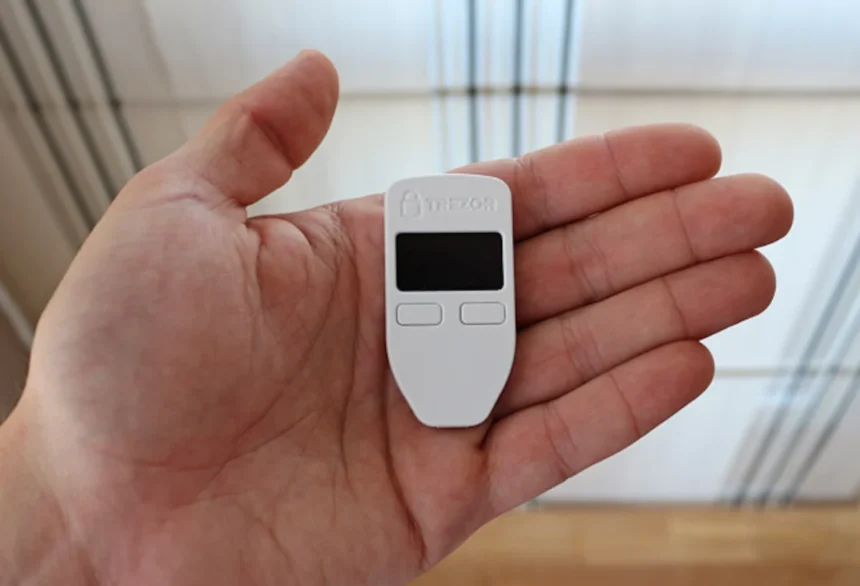
Hardware wallets have long been considered the safest way to store cryptocurrency, especially for users who value long-term security over convenience. Among the earliest names in this space is Trezor One, a device that helped define what cold storage looks like today. But crypto has evolved rapidly. New wallets offer touchscreens, mobile apps, Bluetooth connectivity, and support for thousands of assets.
- What is Trezor One?
- How Trezor One Works
- Supported Cryptocurrencies
- Software and User Experience
- Security Model and Trustworthiness
- Trezor One Price and Value
- Limitations You Should Know About
- Where Trezor One Falls Behind Today
- Asset Support Compared to Modern Wallets
- Desktop Focus vs Mobile Reality
- Is Trezor One Still Secure in 2026?
- Who Should Still Buy Trezor One?
- Who Should Avoid Trezor One?
- Price vs Longevity
- Final Verdict: Is Trezor One Still Good?
This naturally raises an important question for both new and experienced investors: Is Trezor One still good today, or has it become outdated?
This article takes a clear, practical look at the Trezor One. We will cover the basics of how it works, its current price and value proposition, and the key limitations users should be aware of before buying. The goal is simple: help you decide whether Trezor One still makes sense for your needs in 2026.
What is Trezor One?
Trezor One is a hardware wallet designed to store cryptocurrency private keys offline. Unlike software wallets or exchanges, it keeps your keys away from the internet, reducing the risk of hacking, malware, or phishing attacks.
Launched in 2014 by SatoshiLabs, Trezor One was the world’s first commercially available hardware wallet. It quickly gained popularity due to its strong security model, transparent open source firmware, and ease of use compared to paper wallets or command line solutions.
The device itself is small, lightweight, and connects to a computer via USB. It does not have a touchscreen. Instead, it uses two physical buttons and a small monochrome display to confirm transactions and security actions.
How Trezor One Works
At its core, Trezor One is designed around one simple principle: your private keys never leave the device.
When you set up the wallet, it generates a recovery seed, typically 12 or 24 words. This seed is the master key to your funds. As long as you keep this seed safe and offline, you can recover your assets even if the device is lost or damaged.
When you want to send crypto, the transaction is prepared on your computer, but signed inside the Trezor One. The private key never touches your computer or the internet. You physically confirm the transaction using the device buttons after checking the details on the screen.
This setup dramatically reduces the attack surface compared to hot wallets, browser extensions, or centralized exchanges.
Supported Cryptocurrencies
One of the most common concerns about older hardware wallets is asset support. Trezor One supports a solid range of major cryptocurrencies, including:
- Bitcoin
- Ethereum
- Litecoin
- Bitcoin Cash
- Dash
- Zcash
- ERC-20 tokens via Ethereum
For users focused on Bitcoin and Ethereum, Trezor One still covers the essentials well. It also supports many forks and legacy coins that long-term holders may still own.
However, it does not support some newer networks, particularly certain popular blockchains like Solana, Cardano, Polkadot, or XRP. This limitation becomes important when comparing it to newer wallets that support hundreds or thousands of assets natively.
Software and User Experience
Trezor One works primarily with Trezor Suite, the company’s official desktop application. Trezor Suite is available for Windows, macOS, and Linux and offers a clean, beginner-friendly interface.
Through Trezor Suite, users can:
- Check balances
- Send and receive crypto.
- Manage accounts
- Update firmware
- Set security options like PIN and passphrase.
The software has improved significantly over the years and now includes features like built-in exchange integration and basic portfolio tracking.
While the experience is smooth on desktop, mobile support is limited. Trezor One does not connect directly to smartphones without workarounds, which can be inconvenient for users who prefer managing crypto on the go.
Security Model and Trustworthiness
Security is where Trezor One still earns respect.
The device uses open source firmware, meaning its code can be audited by the public. This transparency is valued by many security-focused users who prefer verifiable systems over closed-source designs.
Trezor One does not use a secure element chip, unlike some competitors. Instead, it relies on transparent architecture and cryptographic protections. While this has sparked debate, there is no evidence of remote hacks that drain funds when the device is used correctly.
Physical attacks are theoretically possible if an attacker has the device in hand and advanced tools. However, using a strong PIN and an optional passphrase significantly reduces this risk.
For most users, especially those storing crypto at home, the security level remains more than adequate.
Trezor One Price and Value
One of the biggest reasons Trezor One remains relevant is its price.
As of 2026, Trezor One is usually priced lower than most modern hardware wallets. It often costs significantly less than touchscreen models or wallets with Bluetooth support.
This makes it appealing for:
- Beginners entering crypto
- Long-term Bitcoin holders
- Users who want cold storage without premium features
- Investors securing a secondary or backup wallet.
When judged purely on security per dollar, Trezor One still offers strong value. You are paying for core protection, not extra features that may or may not matter to you.
Limitations You Should Know About
Despite its strengths, Trezor One is not perfect.
The most noticeable limitation is its basic hardware. The screen is small, the buttons are simple, and entering PINs or passphrases can feel slow compared to touchscreen devices.
Asset support is another constraint. If your portfolio includes many newer blockchains, you may need additional wallets or a different hardware solution altogether.
Finally, the lack of native mobile support can be a deal breaker for users who primarily manage crypto through smartphones.
These limitations do not make Trezor One bad, but they do define who it is best suited for.
Where Trezor One Falls Behind Today
While Trezor One remains secure and reliable, it is important to be honest about where it shows its age. Hardware wallets released in recent years focus heavily on convenience, broader asset support, and mobile-first usage. Trezor One does not compete strongly in these areas.
The most obvious drawback is the lack of modern hardware features. There is no touchscreen, no Bluetooth, and no battery. Every action requires a wired connection to a computer. For users who are active traders or frequently move funds, this can feel slow and restrictive.
Another limitation is user interaction. Entering a PIN or passphrase using two physical buttons can be tedious, especially if you use a long passphrase, which is recommended for higher security. While this process is intentionally designed to be safe, it is not particularly comfortable.
For long-term holders who rarely move funds, these drawbacks may not matter. For frequent users, they can become frustrating over time.
Asset Support Compared to Modern Wallets
Asset support is one of the most decisive factors when choosing a hardware wallet today.
Trezor One supports major cryptocurrencies like Bitcoin, Ethereum, Litecoin, and ERC-20 tokens. This is sufficient for many users, especially those who focus on established assets.
However, it does not support several major networks that have grown significantly in popularity. Coins such as Solana, Cardano, Polkadot, and XRP are not natively supported. If your portfolio includes these assets, Trezor One will not be enough on its own.
Many newer wallets support thousands of coins and tokens across dozens of blockchains. Trezor One takes a more conservative approach, prioritizing stability over expansion. This philosophy is not wrong, but it does limit flexibility.
For investors who hold a diverse portfolio or frequently explore new ecosystems, this is a serious limitation.
Desktop Focus vs Mobile Reality
Crypto usage has shifted strongly toward mobile devices. Many users now manage wallets, DeFi apps, and NFTs directly from their phones.
Trezor One is not built for a mobile-first world.
While it can technically work with Android devices using adapters and third-party tools, the experience is not smooth or officially optimized. There is no Bluetooth support and no native mobile app that works seamlessly out of the box.
This makes Trezor One best suited for users who are comfortable managing crypto on a desktop or laptop. If you prefer quick mobile access, modern alternatives offer a much better experience.
Is Trezor One Still Secure in 2026?
Security remains the strongest argument in favor of Trezor One.
Despite its age, there have been no known remote hacks that compromise funds when the device is used properly. The open source firmware continues to be maintained and updated by the manufacturer, and vulnerabilities that have been discovered over the years have been addressed responsibly.
The lack of a secure element chip is often mentioned as a weakness. In reality, this only becomes a concern in physical attack scenarios, where an attacker has prolonged access to the device. Even then, using a strong PIN and passphrase dramatically reduces risk.
For the average user storing crypto at home, Trezor One remains extremely secure.
In other words, it may not be the most advanced wallet, but it is far from unsafe.
Who Should Still Buy Trezor One?
Trezor One still makes sense for specific types of users.
It is a good choice if you are:
- A Bitcoin-focused investor
- Holding crypto for the long term
- Looking for an affordable hardware wallet
- Comfortable using desktop software
- Interested in open source security models
It also works well as a secondary or backup wallet. Some experienced users prefer keeping long-term holdings on a simple, reliable device while using a more feature-rich wallet for daily activity.
If your priority is storing assets safely and doing very little else, Trezor One still delivers.
Who Should Avoid Trezor One?
Trezor One is not ideal for everyone.
You may want to look elsewhere if you:
- Hold many newer or emerging cryptocurrencies
- Use DeFi, NFTs, or Web3 apps frequently.
- Prefer managing crypto on your phone.
- Want a touchscreen or wireless connectivity.
- Value convenience over minimalism
For these users, the limitations of Trezor One can outweigh its strengths. A more modern wallet will likely provide a smoother experience and better long-term flexibility.
Price vs Longevity
One important question many buyers ask is whether buying an older device is still worth it.
Trezor One benefits from long-term firmware support. The manufacturer has a strong track record of maintaining devices well beyond their initial release. This reduces the risk of buying something that becomes obsolete overnight.
From a price perspective, Trezor One remains one of the most affordable reputable hardware wallets available. You are not paying for premium design or extra features. You are paying for proven security.
If your needs are simple, this can actually be a strength rather than a weakness.
Final Verdict: Is Trezor One Still Good?
So, is Trezor One still good in 2026?
The honest answer is yes, but with clear boundaries.
Trezor One is still a secure, reliable hardware wallet that does exactly what it was designed to do: protect private keys offline. It has stood the test of time, earned trust within the crypto community, and continues to receive updates.
At the same time, it is no longer a one-size-fits-all solution. Crypto users today expect broader asset support, mobile access, and smoother interfaces. Trezor One does not try to compete on those fronts.
If you value simplicity, transparency, and proven security, Trezor One remains a solid choice. If you want modern features and flexibility, you will likely be better served by a newer device.
In the end, Trezor One is not outdated. It is simply focused. And for the right user, that focus is exactly what makes it still good.
Also read: Ledger Nano S Plus Review: Long-Term Reliability and Privacy